Search by product name, Latin name or CAS number.
Choosing among the world’s top 10 Botanical Extract suppliers takes more than comparing prices or product catalogs. Buyers need evidence of botanical identity, consistent active-compound levels, and dependable batch records. A clean specification sheet matters. So does the harvest behind it.
Paracelsus, the physician whose ideas helped shape early pharmacology, is widely associated with the line, “The dose makes the poison.” The saying is often translated and paraphrased, but its lesson remains useful: an extract’s strength and intended use deserve careful review. For suppliers, that means clear testing methods, traceable sourcing, and honest communication when a crop varies. A polished brochure cannot replace those details.
This guide compares ten major suppliers by portfolio, sourcing transparency, quality systems, and global reach. It also considers practical questions: Can the company provide species-level identification? Are extraction solvents and standardization targets disclosed? Can a buyer request representative certificates of analysis? These points help distinguish a broad catalog from a reliable supply partner. Still, no ranking fits every buyer. A small cosmetics brand may value flexible order sizes, while a supplement manufacturer may prioritize repeatable specifications and technical support. Some information is difficult to compare publicly, and that limitation should be acknowledged. The strongest choice is not always the largest company. It is the supplier whose documentation, capabilities, and communication match the product being developed.
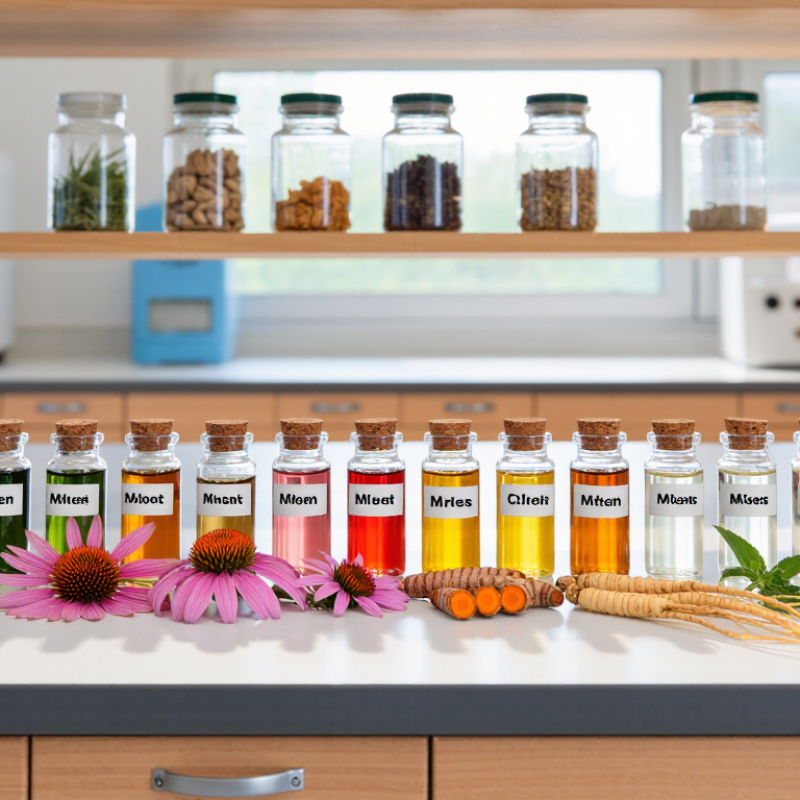
Botanical extracts are preparations made by separating selected compounds from plant material, such as leaves, roots, flowers, or bark. Water, alcohol, or other approved processing methods may be used, depending on the plant and intended application. The result can be a liquid, powder, or more concentrated ingredient. These forms are not interchangeable. A pinch of one extract may differ greatly from the same amount of another.
The World Health Organization has reported that 170 Member States use traditional medicine.
This figure describes traditional medicine broadly; it does not mean every country uses botanical extracts in the same way. Practices, preparations, and levels of oversight vary. That distinction matters. For buyers and researchers, reliable information should include the plant’s scientific identity, the part used, extraction method, and batch testing for identity and contaminants.
A label alone is not enough. Even careful testing has limits, and natural variation between harvests can affect composition. That imperfect reality deserves more attention than a polished product description.
Selecting a botanical extract supplier starts with evidence, not a polished brochure. Request current GMP documentation and confirm that its scope covers the actual extraction and packing site. Review procedures for cleaning, supplier approval, deviations, and batch release. Small details matter. A certificate for another facility is not enough.
ISO 22000 certification can indicate a structured food safety management system, but check its scope, validity, and issuing body. Ask how the supplier assesses hazards linked to raw materials, processing, and storage. Then examine a recent batch record and certificate of analysis. Do the botanical name, plant part, extract ratio, and test results match your specification? Ask which methods were used and whether the laboratory is qualified for those tests. A familiar-looking document can still leave gaps.
Traceability should connect a finished lot to its raw material source, harvest or purchase records, processing dates, and release checks. Request a mock recall or lot-tracing example. See how quickly the supplier can identify affected material and provide supporting records. Follow the trail. Paper systems may work, but they can slow down when records are incomplete or staff are unavailable. No checklist removes every risk. Compare evidence across documents, ask how exceptions are handled, and record unresolved questions before approving a supplier.
Top 10 Global Botanical Extract Suppliers: Regions and Specialties
Botanical extract suppliers cluster around growing regions, processing centers, and export hubs. In China and India, broad herb and spice crops support extracts used in foods, cosmetics, and supplements. European suppliers often emphasize traceability, standardized specifications, and extracts from plants such as elderberry or rosemary. North American processors may focus on local crops and customized production. South American and African suppliers can offer distinctive plants and regional sourcing, but harvest consistency may vary. A supplier’s location alone does not prove quality.
Specialties differ by raw material and processing method. Some suppliers focus on tea, turmeric, or ginger; others produce concentrated fruit, flower, or leaf extracts. Ask whether the extract is identified by plant part, solvent, and marker compounds. Request recent test reports for identity, strength, and contaminants, plus details on harvest season and batch variation. Details matter. A polished specification is useful, but it cannot replace independent verification. I would also question unusually uniform supply claims; crops change with weather, and sourcing is rarely perfect.
Tips: Compare suppliers using the same sample requirements and documentation checklist. Ask for a small, representative batch before committing to larger volumes. Check how the supplier handles storage, packaging, and changes in origin. A clear answer is reassuring; a vague one is a reason to pause.
When comparing botanical extract suppliers worldwide, start with the specification, not the headline percentage. A standardized extract should identify its plant species, plant part, extraction ratio, and marker compounds. Ask whether those markers are measured by a validated method, such as HPLC, and whether results apply to every batch. A “10%” claim means little if the test method or permitted variation is unclear. Request a recent certificate of analysis, plus data on contaminants and moisture. Details matter.
Solvent choice shapes both the extract and its documentation. Water and ethanol are common options, but extraction conditions affect flavor, color, and which compounds remain. Ask suppliers to disclose the solvent system and verify residual-solvent testing when relevant to the product’s intended use. Supercritical CO₂ extraction can reduce reliance on conventional organic solvents and may selectively capture lipophilic compounds. It is not automatically superior: pressure, temperature, and post-processing influence the result, and polar compounds may require a different approach. Compare samples under the same conditions. Smell them. Check how they disperse in your actual formula. Supplier documents help, but they do not replace independent review; specifications can still leave practical questions unanswered.
For botanical extract suppliers worldwide, quality claims matter less than batch-level evidence. HPLC identity testing can compare a sample’s chromatographic profile with an authenticated reference. A matching peak pattern supports identity, but it does not prove purity or reveal every adulterant. Methods should be validated for the specific plant and extract. Ask for the test method, reference material, and results tied to the lot you are buying. A certificate without traceable batch details is not enough.
Tips: Request pesticide results from a qualified laboratory, ideally one accredited for the relevant methods. Check the analyte list, reporting limits, and sample date. EU maximum residue levels vary by pesticide and commodity, so confirm the current limits for the exact botanical ingredient. “Compliant” does not mean “pesticide-free.” Retain sealed samples and compare them with the supplier’s report.
A careful supplier can explain how it samples, stores, and tests each batch—not just send polished paperwork. Still, even good records have limits: a test covers the sample received, not every particle in a shipment. Ask how the sample was taken and whether the laboratory’s scope includes the requested tests. For higher-risk materials, consider independent confirmation before use. I would not treat one HPLC trace as a complete quality verdict; that shortcut is tempting, but incomplete.
| Qualification Slot | Botanical Extract Category | Useful HPLC Identity Markers | Identity and Quality Checks | EU Pesticide MRL Checks | Documents to Request |
|---|---|---|---|---|---|
| 01 | Turmeric root extract (Curcuma longa) | Curcumin, demethoxycurcumin, and bisdemethoxycurcumin | Compare the chromatographic fingerprint and curcuminoid profile with the agreed specification; confirm botanical part and extraction details. | Assess each detected pesticide against the applicable EU MRL for the relevant commodity and active substance; investigate results above the applicable limit. | Lot-specific certificate of analysis (CoA), chromatogram, method details, and pesticide-residue report. |
| 02 | Green tea leaf extract (Camellia sinensis) | Catechins, including EGCG, EGC, ECG, and EC; caffeine where specified | Review the catechin fingerprint and assay values; check that the test method and reporting basis match the product specification. | Verify residue results against current EU commodity- and substance-specific MRLs, including any applicable default limit. | CoA, HPLC chromatogram, pesticide panel and results, and traceability information. |
| 03 | Milk thistle fruit extract (Silybum marianum) | Silymarin flavonolignans, such as silybin, isosilybin, silychristin, and silydianin | Check the flavonolignan profile and the supplier’s definition of the reported silymarin assay. | Check every reported pesticide residue against the applicable EU MRL for the relevant commodity and active substance. | CoA, HPLC profile, validated or verified method information, and lot-specific residue report. |
| 04 | Ginkgo leaf extract (Ginkgo biloba) | Flavone glycosides and terpene lactones, including ginkgolides and bilobalide | Review the chromatographic profile and the specification for marker groups; request relevant impurity testing when required by the product standard. | Confirm the residue panel is appropriate for the botanical raw material and compare findings with current applicable EU MRLs. | CoA, chromatograms or test summary, pesticide-residue report, and raw-material traceability records. |
| 05 | Grape seed extract (Vitis vinifera) | Procyanidins and other proanthocyanidins; profile depends on the agreed specification | Confirm the identity method and assay basis, since proanthocyanidin results can depend on the analytical method used. | Review pesticide results using the applicable EU MRLs for the relevant commodity and active substances; retain the laboratory report. | CoA, method description, chromatographic or fingerprint data, and lot-specific residue results. |
| 06 | Rosemary leaf extract (Salvia rosmarinus, synonym Rosmarinus officinalis) | Carnosic acid and carnosol | Check the marker profile and assay against the product specification; distinguish antioxidant extracts from essential oil products. | Check the raw-material commodity classification and evaluate residues against the current EU MRLs for each relevant pesticide. | CoA, HPLC data, product specification, and pesticide-residue report. |
| 07 | Ginger rhizome extract (Zingiber officinale) | Gingerols and shogaols, with the marker set defined by the specification | Compare the chromatographic fingerprint with a suitable reference and confirm whether processing affects the gingerol-to-shogaol profile. | Assess residues against the applicable EU MRLs for the relevant commodity and active substances; document any non-detects with reporting limits. | CoA, HPLC chromatogram, pesticide panel, and lot traceability details. |
| 08 | Black pepper fruit extract (Piper nigrum) | Piperine | Confirm piperine identity and assay by HPLC and review the fingerprint for consistency with the agreed specification. | Compare each quantified residue with the current applicable EU MRL; ensure analytical reporting limits are stated. | CoA, HPLC result and method, pesticide-residue report, and origin information. |
| 09 | Ashwagandha root extract (Withania somnifera) | Withanolides, with individual markers and total-assay definition specified by the buyer | Review the HPLC fingerprint, marker selection, assay basis, and botanical-part declaration; verify that the method matches the specification. | Request a lot-specific residue screen and evaluate results against applicable EU MRLs for the relevant commodity and active substances. | CoA, chromatogram, method and specification, pesticide report, and botanical-part traceability. |
| 10 | Echinacea extract (Echinacea species) | Species- and plant-part-dependent markers; examples include cichoric acid and selected alkamides | Confirm the declared species and plant part first; select HPLC markers appropriate to that identity and the agreed extract specification. | Check the commodity classification and compare each residue with current applicable EU MRLs; retain results and reporting limits. | CoA, botanical identity documentation, HPLC profile, and lot-specific pesticide-residue report. |
Note: This is a supplier qualification framework, not a verified ranking or an assessment of named suppliers. HPLC markers and specifications should be agreed for each product and method. Under EU Regulation (EC) No 396/2005, pesticide MRLs depend on the pesticide and commodity; where no specific MRL applies, the default limit is generally 0.01 mg/kg, subject to the regulation’s provisions and exceptions. Verify current legal requirements and commodity classifications before release.
No. Growing regions and processing hubs shape availability, but location alone cannot confirm quality.
Some focus on tea, turmeric, or ginger. Others produce fruit, flower, or leaf extracts.
Check the plant species, plant part, extraction ratio, solvent, and marker compounds. Details matter.
Request a recent certificate of analysis and test results for identity, strength, contaminants, and moisture.
No. Ask how markers were measured and whether the method is validated. A “10%” claim needs context.
Water and ethanol can affect flavor, color, and retained compounds. Ask which solvent system was used.
Not automatically. It may suit lipophilic compounds, while pressure, temperature, and processing affect the result.
Use the same document checklist and sample requirements. Smell samples and test how they disperse in your formula.
Ask about harvest seasons, batch variation, packaging, storage, and changes in origin. Crops change. I still question unusually uniform supply claims.
Botanical Extracts are plant-derived ingredients used in foods, supplements, cosmetics, and other products. The World Health Organization reports that traditional and plant-based practices are used in 170 member states, underscoring the broad relevance of botanical materials. Choosing a supplier involves more than comparing price: buyers should assess manufacturing controls, GMP and ISO 22000 certifications, traceability from plant source to finished ingredient, and the supplier’s ability to provide clear documentation.
A global supplier comparison should consider regional expertise and specialties alongside how extracts are made. Standardization helps ensure consistent levels of identified compounds, while extraction solvents and supercritical CO₂ methods can affect composition and intended applications. Quality checks are equally important: HPLC testing can help confirm identity and composition, and pesticide screening should be reviewed against applicable EU maximum residue limits. Together, these benchmarks provide a practical framework for evaluating a Botanical Extract and selecting a reliable supplier.